What to Check Before a Skin Booster in Seoul
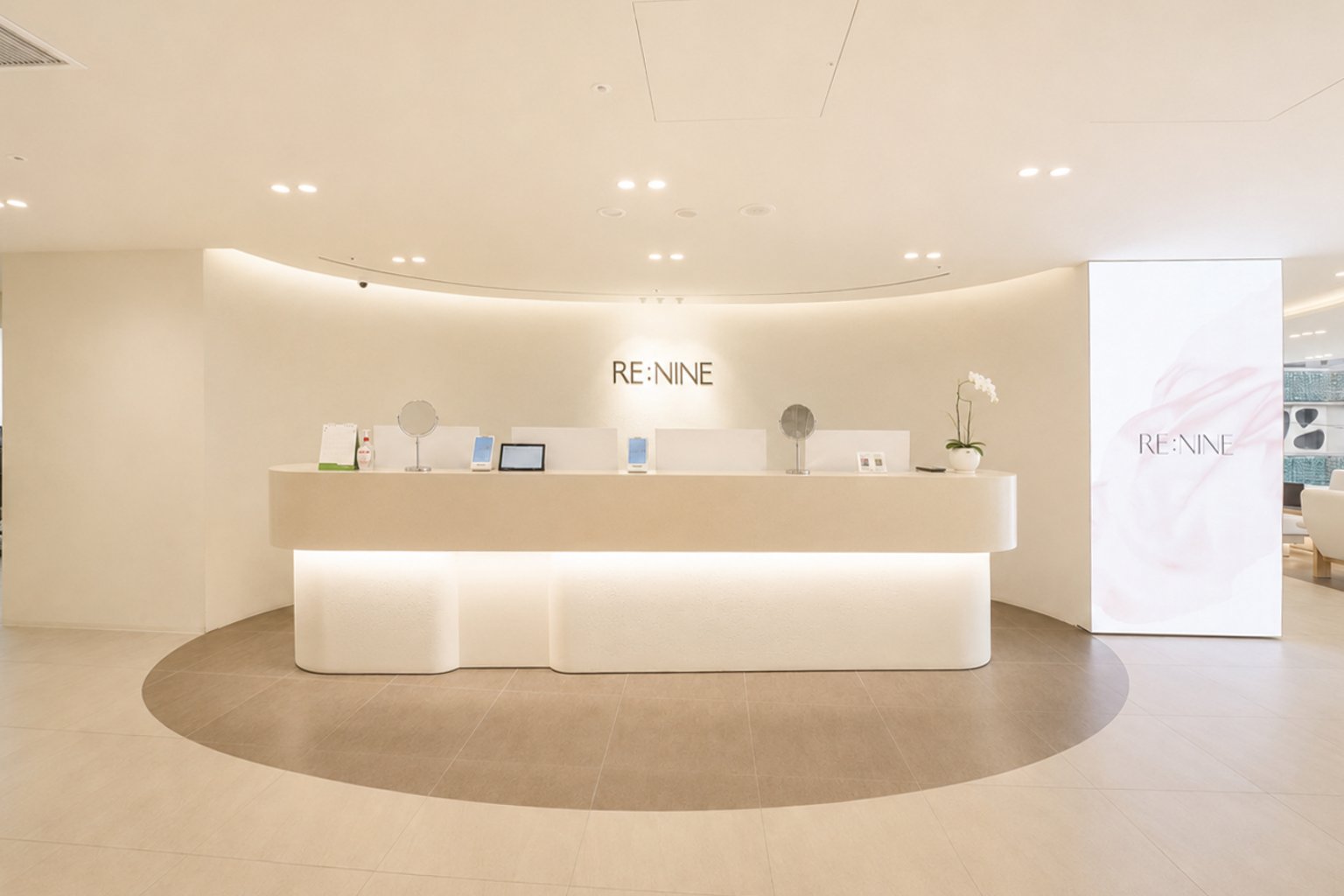
"Skin booster" covers injectable ingredients as different as hyaluronic acid and polynucleotides, so the same word can point to treatments with different goals and different recovery paths. At RE:NINE Clinic in Seoul's Jung-gu district, we start every skin booster inquiry with a skin exam rather than a product name, then match the finding to hydration, texture, pigmentation, or lifting care as needed. This guide explains what that exam checks, what the published research on skin boosters actually supports, and how to plan a visit around a Seoul trip.
If you are researching skin boosters before a Seoul trip, the product name is usually the second decision, not the first. What actually determines the outcome is what your skin needs right now: whether dryness or fine lines is the primary concern, whether pigmentation is layered on top, and how much recovery time your itinerary allows. We put the exam ahead of the product conversation because those answers change the plan.
"Skin Booster" Describes a Category, Not One Injection
Clinics and patients both use "skin booster" to describe injectable products that differ in ingredient, formulation, and approved use. Two people can hear the same term and walk away expecting different results, because the underlying ingredient is not the same.
That is why our consultations start with two questions before any product name comes up: which ingredient family is actually being discussed, and what the patient wants to change, whether that is hydration, skin texture, or fine lines. The specific product can be selected once those answers are clear.
What We Check Before Recommending Anything
During the skin exam, several questions matter more than whether a treatment is technically available:
- Is the dullness coming from dryness and texture, or is pigmentation layered on top?
- If pigmentation is present, does it look like superficial spots or a melasma-type pattern that reacts more easily to irritation?
- Has there been recent sun exposure, prior procedures, or a history of pigmentation appearing after treatment?
- How many days remain in the travel schedule, and is there room to manage a visible recovery reaction?
We ask because these answers change the outcome. According to AAD Meeting News (2025), lower-fluence approaches such as low-fluence Q-switched Nd:YAG or pico lasers are used on pigmented skin, and aftercare matters for limiting complications including post-inflammatory hyperpigmentation. That is the reasoning behind sequencing the exam before the equipment choice, not after it.
What the Hyaluronic Acid Research Actually Shows
The strongest evidence for skin boosters concerns hydration and surface texture, and it comes from hyaluronic acid formulations specifically. A multicenter, randomized, evaluator-blinded study published on PubMed Central (2026) enrolled 448 adults, split them into treatment and control groups, and injected non-cross-linked hyaluronic acid three times at four-week intervals. The treatment group scored better than the control group on skin hydration, elasticity, roughness, and fine-line measures.
The size of the improvement matters less than the conditions that produced it. This result came from a three-session protocol spaced a month apart, repeated over time rather than delivered in a single visit, and it applies to that specific schedule.
A narrower question, enlarged pores, was tested with a similar design. A research team at Mahidol University's Ramathibodi Hospital published a split-face, double-blind randomized study in 2025 that enrolled 30 people with enlarged pores, injected two different hyaluronic acid formulations on opposite cheeks three times at four-week intervals, and measured pore volume objectively with an Antera 3D device. Twenty-nine participants completed the study. With a sample this small, the result should not be read as a guarantee for every skin type.
Polynucleotides: Interest Is Growing Faster Than the Evidence
Polynucleotide injectables have drawn rapid interest, but the evidence base is younger and thinner than hyaluronic acid's. A 2025 systematic review in the Journal of Cosmetic Dermatology searched literature from 2010 through 2024 and included nine studies covering 219 patients total. The review reported statistically significant improvement in wrinkles, skin texture, and elasticity, with adverse effects that were generally mild and temporary. At the same time, the authors rated the included studies as low to moderate quality, noted that injection sites and technique varied across studies, and concluded that consensus on optimal use is still limited.
Put plainly: for hydration and texture, repeated hyaluronic acid protocols have the most consistent published support. For polynucleotides, early results are encouraging but the studies behind them are smaller and more inconsistent in method. Neither body of research describes the outcome of a single session, and neither should be generalized across every product on the market.
Planning Recovery Around a Seoul Itinerary
Injectable treatments can produce redness, swelling, or bruising, and how long that lasts depends on the product, the injection technique, and individual skin response. Before treatment, we walk through the expected timeline and what to do if something looks unusual afterward.
If a Seoul visit is already on the calendar, the recovery window deserves a place on that calendar too. Scheduling the exam earlier in the trip, rather than right before a flight home, keeps more options open. That is also why we ask new patients how many days remain in their stay and whether any important events fall within that window.
When Pigmentation Is Part of the Picture
Many people come in asking about skin boosters because their skin tone looks uneven, but uneven tone is not always a hydration problem. Pigmentation responds differently depending on its type, and skin that reacts easily to irritation can darken further if treated in the wrong order. This is the same context AAD Meeting News (2025) addresses when discussing melasma alongside skin type and post-procedure care.
At RE:NINE Clinic, skin booster and laser or pigment care are discussed within the same consultation. The exam identifies what is happening with pigmentation first, and that finding shapes the order of treatment, including what should wait until later. Reviewing both concerns together reduces the number of decisions made on a "let's try it and see" basis.
Visiting RE:NINE Clinic in Seoul
We are located at Seoul Centre Building, 2nd floor, 116 Sogong-ro, Jung-gu, Seoul, between City Hall and Myeongdong, which makes a mid-trip visit realistic for most itineraries. Consultations take place in private rooms, a setting we consider important when patients are discussing visible skin concerns.
Our practice covers skin boosters, laser and pigment care, lifting and anti-aging, diet and body consultations, and hair removal. Lifting consultations reference our officially listed equipment, including Ulthera Prime, Thermage FLX, Sofwave, Onda, and Potenza. Weight-related inquiries are handled through the InBody body composition measurement and doctor consultation described on our diet page.
Three things are worth bringing to a first consultation: recent photos of your skin, a record of past treatments and current medications, and your remaining travel dates. Bookings and pre-visit questions go through our official reservation page, which lists KakaoTalk, WhatsApp, LINE, and WeChat contact channels by language, and by phone at 02-318-7379.
FAQ
Can I book just the exam without committing to a treatment?
Yes. Our consultation is built around reviewing your skin and laying out the options, and there are cases where we do not recommend a treatment at that visit.
What history should I share before the consultation?
Let us know about melasma, pigmentation that appeared after a past procedure, recent heavy sun exposure, current medications, and any ongoing dermatologic treatment. A history of pigment reactions changes both the approach and the order of treatment.
How do I contact the clinic to book or ask questions in advance?
Our official reservation page lists KakaoTalk for Korean, WhatsApp for English, LINE for Japanese, and WeChat for Chinese inquiries, current as of September 2026. These are booking and inquiry channels; they do not guarantee interpretation during treatment or follow-up support after you return home.
Can pigment treatment and a skin booster happen on the same day?
It depends on your skin's condition and is determined at the exam. If pigmentation is reacting easily to irritation, spacing the two treatments apart rather than combining them in one visit can be the safer approach.
How many sessions does a skin booster typically require?
The studies reporting measurable results generally used repeated protocols, such as three sessions spaced four weeks apart (multicenter RCT, 2026). The right number and spacing for you depends on your skin and goals, which we address after the exam.
If you are weighing a skin booster before a Seoul trip, the product decision can wait. Once the exam is done, the remaining choices tend to get simpler. Consultations and bookings are available through the RE:NINE Clinic reservation page.